







Aviation has never had more data, sophisticated technology or advanced tools to support safe operations. AI can identify patterns across vast datasets, predictive analytics can help detect emerging risks, and automation increasingly supports areas ranging from maintenance and flight operations to safety management and emergency response planning.
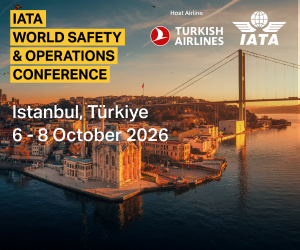
Yet amid this technological progress, one essential truth remains: aviation safety depends on people. That is why the IATA World Safety and Operations Conference, taking place in Istanbul, Türkiye, from 6 to 8 October, will put people at the centre of the discussion under the theme “Performance Through People: Driving Safety, Operational Agility, and Crisis Response.”
Technology can generate insights, alert people to risks and support operational decisions. But it is people who interpret information, apply judgement, respond to disruption and take responsibility for action.
Every day across the aviation ecosystem, pilots, engineers, maintenance technicians, air traffic controllers, cabin crew, dispatchers, operational teams and safety specialists make decisions that keep the industry moving safely. They assess risks, manage uncertainty and respond to situations that cannot always be addressed by technology alone.
This human capability is becoming even more important as aviation navigates an increasingly complex operating environment. Geopolitical disruption can alter flight paths and close airspace with little warning. Risks such as runway incursions require people to maintain situational awareness and act decisively, while severe weather and emerging technologies are changing how work is performed and risks are managed.
Success therefore depends not only on having the right technology, but also on equipping people with the skills, training and support to use it effectively. Safety professionals must be able to interpret and challenge AI-generated insights. Operational teams must know how to work alongside automated systems while retaining the expertise to intervene when necessary. Leaders must foster cultures that encourage reporting, learning and continuous improvement.
Technology provides tools and insights. Human expertise determines how they are used.
This is not a new lesson. Aviation’s strong safety performance has been built on decades of investment in human factors, crew resource management, safety culture and organizational resilience. The industry has long understood that incidents rarely result from a single technical failure. They more often involve complex interactions among people, systems and organizational processes. Today’s challenges require us to continue developing that understanding.
This means giving safety professionals access to high-quality training and development. It means creating environments in which employees feel able to report concerns and organizations can learn from them. It also means recognizing the importance of mental health, wellbeing and peer support, and ensuring that organizations understand their duty of care before, during and after an incident.
We must also prepare a new generation to enter the workforce. Aviation needs to attract, develop and retain the talent required to sustain world-class safety performance. Technical expertise remains essential, but so do leadership, communication, critical thinking and collaborative problem-solving. Developing the next generation of safety leaders is therefore not simply a workforce priority. It is a safety imperative.
WSOC 2026 will bring together airlines, regulators, manufacturers, airports, air navigation service providers and safety experts to examine how people interact with technology, how organizations can strengthen resilience and how aviation can prepare its workforce for the future.
Across dedicated tracks covering Safety, Cabin Operations, Operations and Crisis Management, the programme will address subjects including human-centred safety, talent development, crisis management, mental health, emergency response planning and the effect of geopolitical risks on people and operational performance.
These are not separate conversations. They are connected by a common question: how can we create the conditions in which people consistently perform at their best?
The answer will help shape aviation’s future.








Türkçe karakter kullanılmayan ve büyük harflerle yazılmış yorumlar onaylanmamaktadır.